
Restaurant Digital Transformation: A 6-Step Roadmap for 2026
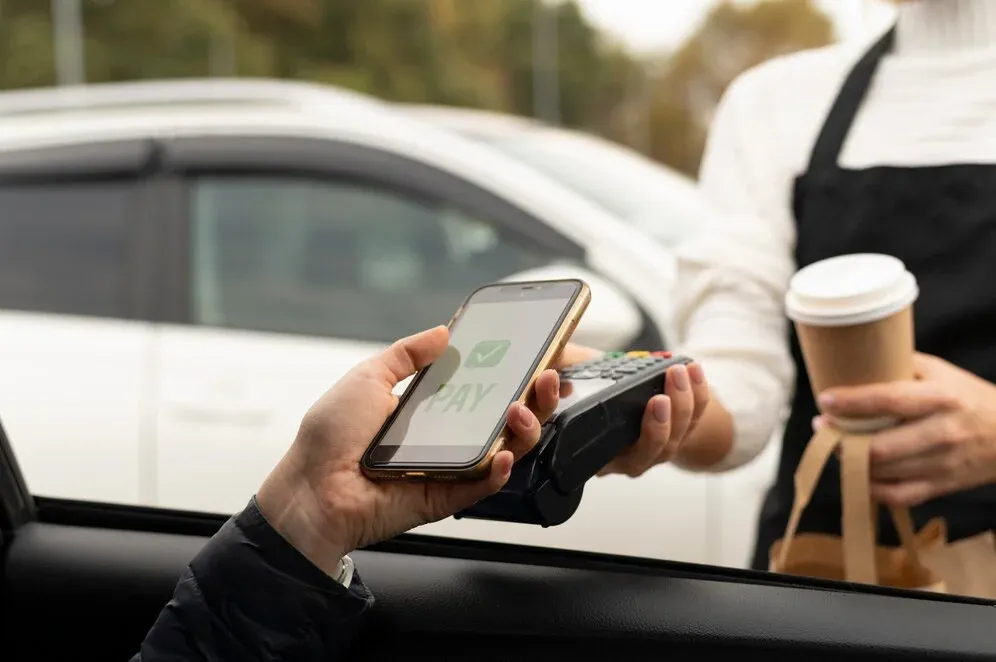
Restaurant digital transformation means running your restaurant on one connected system. Ordering, payments, the kitchen, and guest data work together, and you own your customers.
Most owners already use some digital tools. The problem is that they don't talk to each other, and the guest data ends up with the delivery platforms instead of with you.
This guide gives you a clear definition, a prioritized tech stack, a 6-step roadmap, the KPIs that prove it works, and results from independent restaurants that made the switch.
What is restaurant digital transformation?
Restaurant digital transformation means redesigning how your restaurant takes orders, serves guests, runs the kitchen, and markets itself around connected digital systems and first-party guest data.
The goal is fewer manual steps, fewer intermediaries, and decisions based on real numbers instead of gut feeling.
Three terms are often used interchangeably, but they describe different stages:
Stage | What changes | Restaurant example |
|---|---|---|
Digitization | Paper or analog information becomes digital | A PDF menu on your website, a spreadsheet instead of a notebook |
Digitalization | Single processes run on software | Online ordering, a QR code menu, card payments, a kitchen display |
Digital transformation | Systems connect, and data drives decisions across the business | Website, app, table and marketplace orders land in one panel, every order builds a guest profile, automated campaigns bring guests back |
Most restaurants sit in the middle. They have digitized a few steps, such as a card terminal and a marketplace tablet, but the tools work in isolation. Digitizing single steps is the start; transformation happens when those steps connect and start feeding each other data.
In practice, it covers three layers:
- Guest-facing (front of house): website ordering, a branded app, QR and tableside ordering, kiosks, reservations, and digital payments.
- Operations (back of house): POS integration, kitchen display, order routing and delivery management.
- Data and marketing: CRM, loyalty, marketing automation and reporting.
Why restaurant digital transformation matters in 2026
The business case rests on a few numbers from the National Restaurant Association's 2026 State of the Restaurant Industry report:
Data point | What it means for you |
|---|---|
8 in 10 operators say technology gives them a competitive advantage | Your competitors are already investing |
60% of operators focus 2026 tech budgets on customer experience; 54% on front of house, 48% on back of house | Guest-facing tools come first |
Food and labor costs are both up about 35% since 2019, while margins were 2.8% for full-service and 4% for limited-service restaurants | Efficiency is no longer optional |
26% of operators use AI tools, but only 6% use AI for customer orders | AI is still early; marketing is its main use |
What are the benefits of digital transformation for restaurants?
1. Higher operational efficiency
Digital orders don't need to be retyped, read back over the phone, or re-entered at the pass. Routing them automatically to the kitchen and taking payment online removes common errors and frees your staff to focus on guests.
Our guide to restaurant automation covers the tasks worth automating first.
2. Better guest experience
Guests want speed and control, and most are comfortable with the basics: 74% are comfortable using a mobile app to order and pay, 68% with kiosks, and 67% with a tablet at the table (State of the Restaurant Industry).
In practice, digital restaurants deliver shorter waits, fewer order mistakes, and easy reordering.
3. Data-driven decisions
Every direct order adds a guest profile you can analyze: what they order, how often and when they stop coming back.
In UpMenu's study of 1,709 restaurants, nearly 60% of the average customer base had ordered only once. Without data, you can't see that leak, let alone fix it.
4. Lower costs and higher revenue
Direct orders cut commissions, and repeat guests multiply revenue. UpMenu study found that a loyal customer (10+ orders) is worth about €420 a year, versus about €31 for a one-time customer. Moving even a small share of guests up that ladder changes your annual numbers more than any single promotion.
What to digitize first: the restaurant tech stack by priority
You don't need every tool on day one. The table ranks the most common solutions by how quickly they tend to pay back for an independent restaurant. For the wider landscape, see our overview of restaurant technology trends.
Priority | Solution | What it replaces | First KPI to watch |
|---|---|---|---|
1 | Website with commission-free online ordering | Phone orders, marketplace-only presence | Direct order share |
2 | QR code menu and tableside ordering | Paper or PDF menus, waiting for a server | Ticket time |
3 | CRM and marketing automation | One-off promotions, guesswork | Repeat order rate |
4 | Branded mobile app | Marketplace apps | App order share |
5 | Loyalty program | Paper punch cards | Returning customers |
6 | POS integration and kitchen display | Retyping orders, several tablets on the counter | Order errors |
7 | Online reservation system | Phone bookings, a paper book | No-show rate |
8 | Self-service kiosks | Counter lines | Average order value |
9 | AI tools | Manual copywriting and forecasting | Campaign conversion |
1. Direct online ordering on your website
This is where your transformation begins, because it moves orders and guest data from marketplaces to you.
A commission-free food ordering system on your own website lets guests order pickup or delivery, pay online, and create an account you can market to later. Optimize the site for local search so guests find it before they find you on a marketplace.
2. Branded mobile app
A restaurant mobile app turns occasional guests into regulars. In UpMenu's study of 1,337 restaurants, app customers placed 87% more orders and generated 129% more revenue after one year, with a 14% higher order value.
Orders from the app and the website land in the same admin panel, for a monthly subscription instead of a per-order commission.
Not only did we see our sales approach the $1M mark, but the ease of use and efficiency of the mobile app significantly boosted our online orders.
3. QR code menu, tableside ordering and digital payments
A digital menu is readable on any phone and updates in seconds, unlike a PDF. Shared through a QR code on the table, it lets guests browse, order, and pay without waiting for a server, and every order still goes straight to the kitchen.
Digital payments close the loop. With UpMenu, guests can pay:
- online with Stripe, Apple Pay, Google Pay, PayPal, PayU, or Adyen
- with a credit card
- in cash
4. CRM and marketing automation
A CRM built for restaurants collects every direct order into a guest profile and lets you automatically send the right message.
In UpMenu, you can set up:
- Reminder messages: sent to guests who haven't ordered for a set number of days.
- Loyalty messages: triggered after a set number of orders.
- Event-based messages: sent after account creation, an order, or a rating.
5. Kiosks and AI
Self-service kiosks shorten lines and let guests customize orders without pressure, which works best in quick-service concepts with high counter traffic.
AI is useful today mainly for marketing copy, demand forecasting, and answering common questions; our guide to AI in restaurants shows where it pays off.
Add both once the direct channel and guest data are in place, because both work better with clean order history behind them.
How to start a restaurant digital transformation
Step 1: Audit what you have (weeks 1–2)
List every sales channel and tool. For the last three months, calculate the share of orders per channel, the commissions you paid, the number of devices on the counter, and where guest data is stored. Ask staff where they retype orders; that is your first bottleneck.
Step 2: Set three measurable goals
Replace "improve customer experience" with targets such as "raise direct online orders to 50% of takeout and delivery within six months" or "build a marketing consent base of 1,000 guests". Each goal should map to one KPI you can check every month.
Step 3: Own the direct channel first (weeks 2–4)
Launch website ordering and a QR menu. Move regulars from the phone and marketplaces with bag inserts, a first-order incentive, and an order link on your Google Business Profile. Put the QR code on tables, receipts, and takeout packaging.
Step 4: Connect your systems (weeks 4–8)
Send online orders straight to your existing POS, bring marketplace orders into one panel, and enable consent collection at checkout so every order feeds your CRM. The test is simple: no order should be typed twice.
Step 5: Train your team and run a pilot
Hold short sessions per role, appoint one "tech champion" per shift, and test new tools in one location or one daypart before a full rollout.
Step 6: Measure monthly, then expand
Review your KPIs every month in your restaurant reporting dashboard. Add the app, loyalty, and kiosks once direct orders grow, and watch restaurant industry trends before you commit budget to newer tech.
Common challenges and how to solve them
Challenge | What it looks like | How to solve it |
|---|---|---|
Cost and unclear ROI | Margins of 2.8% to 4% leave little room for big upfront spend | Choose modular monthly subscriptions and compare the fee with the commissions you pay today |
Staff adoption | Tools bought but not used, workarounds on paper | Short role-based training, a champion per shift, a pilot before rollout |
Disconnected systems | Several tablets, retyped orders, data in silos | Integrate online ordering with your POS and bring all channels into one panel |
Guest acceptance | 65% of operators think tech improves the experience, but only just over 40% of guests agree | Start with familiar tools (app, QR, online payment) and always keep a human option |
Data privacy and security | Guest data spread across tools, unclear consent | Collect marketing consent explicitly, use GDPR- and CCPA-compliant software, limit staff access |
How to measure success: 6 KPIs with real benchmarks
KPI | How to calculate it | Benchmark from real restaurants |
|---|---|---|
Direct online order share | Direct online orders ÷ all takeout and delivery orders | Sushi Kushi: online orders make up 60% of total sales |
App order share | App orders ÷ all direct online orders | 51% at Michelangelo 301, 34% at Sushi Kushi |
Commissions avoided | Direct online revenue × marketplace commission rate | $129,474 on $863,166 at a 15% rate |
Repeat customer rate | Customers with 2+ orders ÷ all customers | About 40%; nearly 60% of the average base orders once |
Marketing consent rate | Customers with email/SMS consent ÷ customer base | 33% in restaurants selling online for 3–5 years |
Average order value | Revenue ÷ number of orders | +14% for app customers, +4% after a loyalty launch |
Source: UpMenu Case Studies
Track these every month from the same date range so you compare like with like. For a full list of metrics beyond digital channels, see our list of KPIs every restaurant should track.
Digital transformation examples from independent restaurants
Chains like Domino's and Starbucks are the usual examples, but their budgets aren't yours. These results come from independent restaurants and groups using UpMenu:
Restaurant or study | What they digitized | Result |
|---|---|---|
Michelangelo 301, pizza, Florida | Website ordering and branded app | $863,166 in direct revenue (March 2023–March 2024), 51% of online orders via the app, $129,474 in commissions avoided |
Sushi Kushi, 20-location sushi chain, Poland | Multi-location website, app and online ordering | $2,941,466 in direct revenue (January 2025–2026), 34% via the app, $1.5M+ in commissions saved over ten years |
Branded mobile app | +87% orders and +129% revenue per app customer after one year; 99% of restaurants with 100+ customers saw orders rise | |
Loyalty program | +16.5% orders and +21.7% revenue a year after launch; 64% of active customers had never ordered there before |
What these restaurants have in common is the order of steps: they built the direct channel first, then added the app and loyalty on top of their own guest data.
Frequently Asked Questions
It depends on scope, but a modular start is affordable. At UpMenu's entry tier, website ordering, a branded app, loyalty, and marketing tools cost about $127 per month per location for up to 75 online orders (pricing), with no per-order commission.
Start with commission-free online ordering on your website and a QR menu, then add a CRM to collect guest data. These steps pay back fastest and form the base for an app and loyalty program.
Most will use practical tools: 74% of consumers are comfortable ordering and paying in an app and 68% with kiosks. Acceptance drops for newer tech: only 39% want to order from an AI persona on a video screen.
About the author

CEO & Founder
Founder & CEO of UpMenu. Leads product development. Writes about restaurant technology, POS systems, and the economics of running a modern restaurant. Software engineer turned founder — building UpMenu since 2012, today used by thousands of restaurants in 47+ countries.